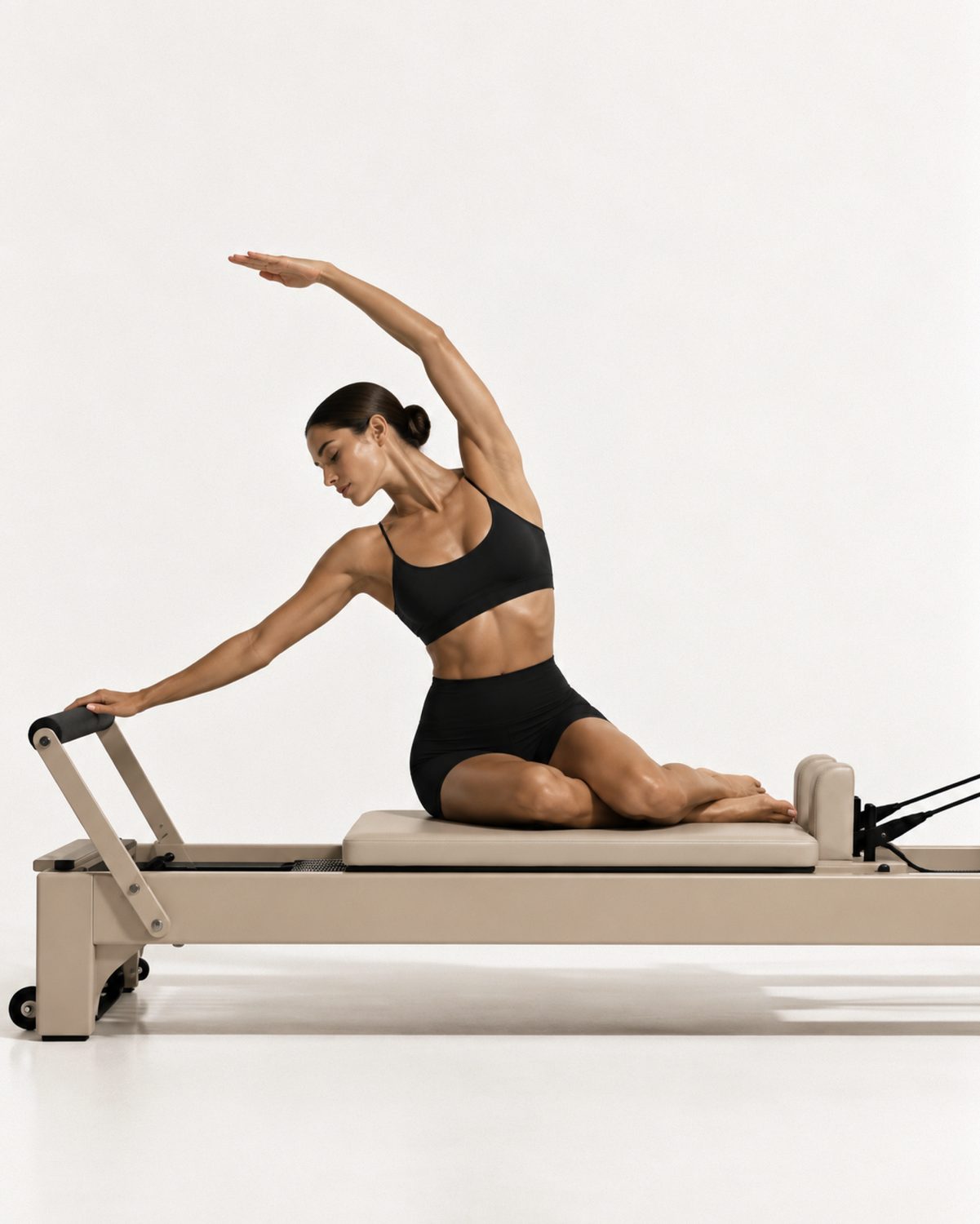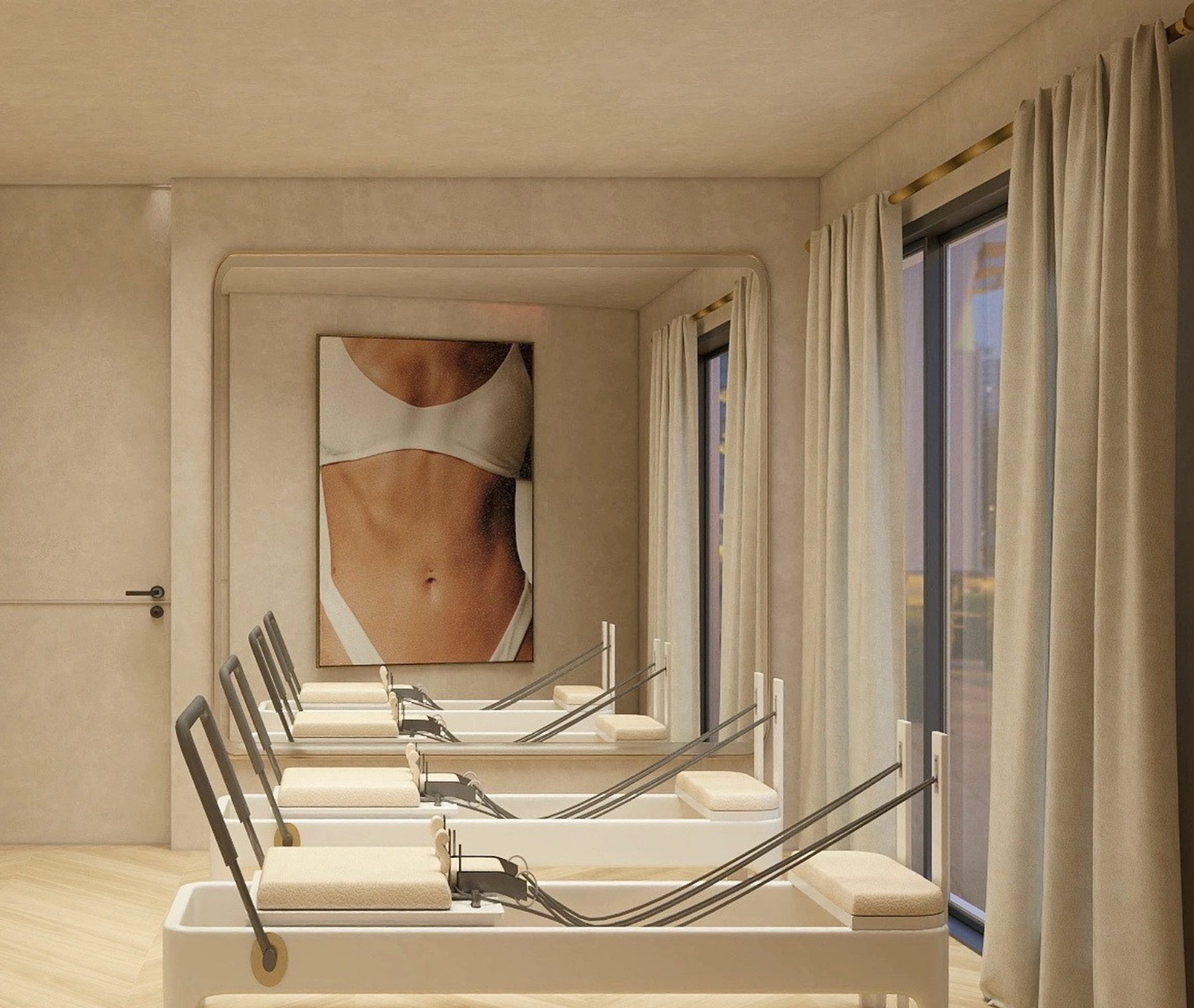
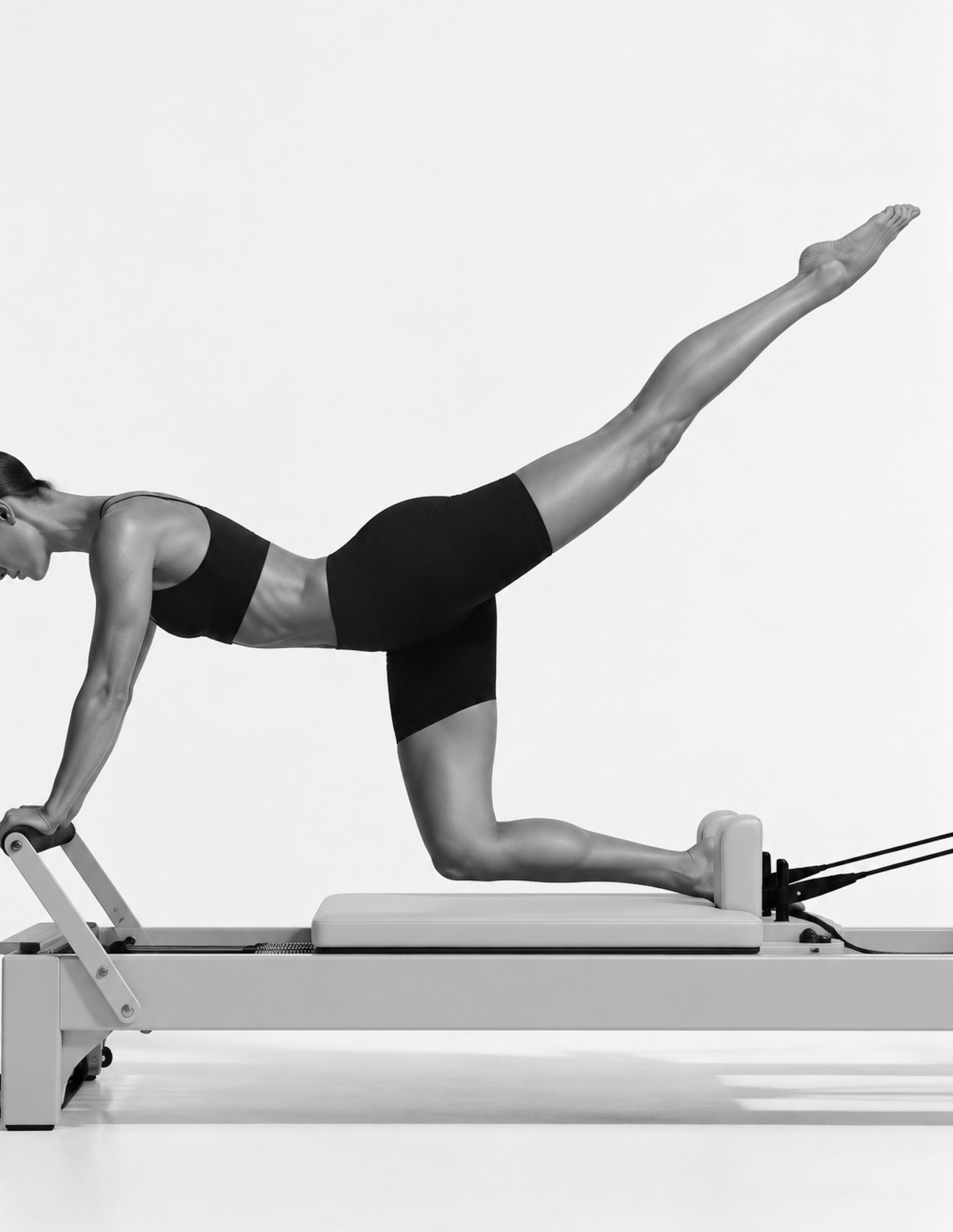

Why the reformer?
Load without impact
The springs resist through both the concentric and the eccentric phase, so the muscle is loaded in both directions while the carriage carries your body weight. Ground reaction forces stay low — the joint is loaded by resistance rather than by landing, which is what separates this from impact work.
Stability before load
The carriage moves under you, so every repetition asks the deep stabilisers — transverse abdominis, pelvic floor, the muscles along the spine — to hold position before the prime movers do anything. Strength built this way sits on top of control instead of compensating for the lack of it.
Alignment and proprioception
The frame gives the body a fixed line to work along and the instructor corrects in real time. Repeating a movement in the same alignment builds proprioception, your own sense of where a joint is in space, which is the part that leaves the studio with you.
Progression you can measure
Spring tension is a setting rather than an estimate. Load rises in known increments, so progression is recorded instead of guessed — and comes back down just as precisely when a session, or an injury, asks for it.
Time under tension
Each movement is slow and continuous, with no pause at the top or the bottom where the muscle could rest. The time a muscle spends working, not the number of repetitions, is what builds strength and endurance, and on the reformer that time stays long without added weight.
Posture and the spine
Much of the work is done lying or kneeling, with the spine supported by the carriage or held long against the springs. The muscles that keep you upright — along the back, around the shoulder blades, deep in the hips — are trained in the position they hold all day.